
Anthropic's S-1: what a frontier lab's finances mean for local builders
Anthropic's S-1 shows $16.3B in first-half revenue and $265.6B in compute commitments. Here is what that means for builders.
On October 26, Anthropic filed the paperwork to go public. The company behind the Claude models plans to list on the Nasdaq under the ticker ANT, but the filing leaves the share count and price range blank, and the offering is not yet effective. What the filing does give us is the first audited look inside a frontier AI lab — and the numbers explain a lot about why cloud AI is priced the way it is, and why keeping your own options open matters.

The growth is real, and it is steep
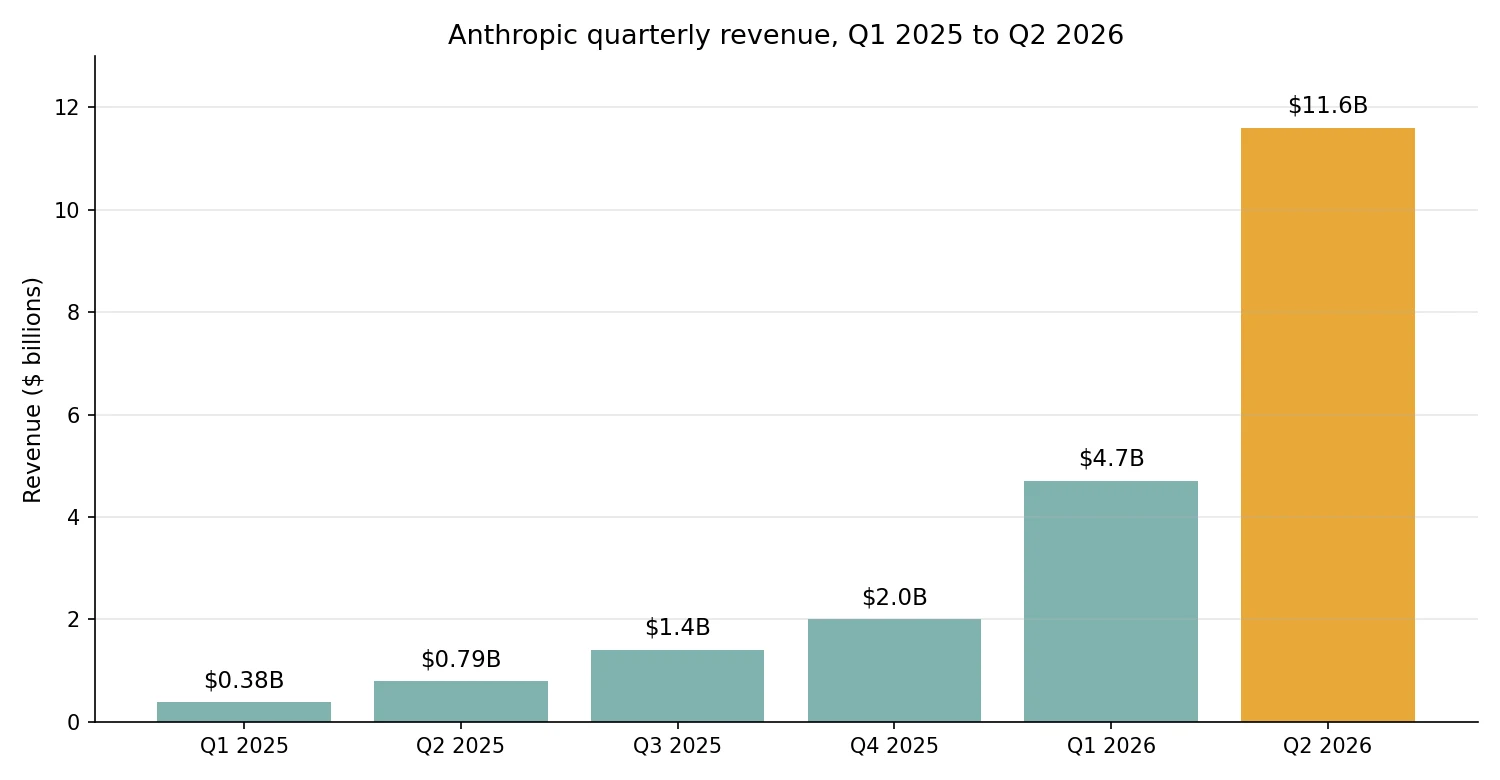
Anthropic reported $16.3 billion in revenue for the first half of 2026, up from about $1.2 billion in the same period of 2025. The second quarter alone brought in $11.6 billion, up from $787 million in the second quarter of 2025 and about $4.7 billion in the first quarter of 2026. About 80 percent of first-half revenue came from consumption-based usage — customers paying for what they use — rather than subscriptions.
The customer base is broad, not concentrated. More than 11,900 customers spent over $100,000 with Anthropic over the past 12 months, as of September 30. No single customer accounted for more than 10 percent of revenue in the nine months ending September 30, and 79 percent of third-quarter revenue came from customers outside the top five. One caution on timing: the filing's full financial statements cover the first half of the year, with selected metrics running through September 30 — there are no full third-quarter statements in it yet.
The $80.7 billion loss is mostly not cash
The headline loss looks alarming: a net loss of $80.7 billion for the first half of 2026. But about $72.4 billion of that is a non-cash accounting entry — the rising value of convertible notes and similar instruments as Anthropic itself became more valuable. When the company is worth more, those instruments are worth more, and accounting rules record the increase as a loss. No cash left the building for that part.
The operating picture improved much faster than the net loss suggests. Anthropic's operating loss for the first half of 2026 was $693 million, after an $8.06 billion operating loss for all of 2025. Compute efficiency helped: the company spent about $0.48 on compute for every dollar of revenue in the second quarter of 2026, down from about $2.50 in the first quarter of 2025. Serving models got cheaper per dollar earned, even as total compute spending rose to about $8.9 billion for the half, up from about $2.3 billion a year earlier.
The compute bill is the real story
The number that matters most for builders is the commitment side. As of June 30, Anthropic listed about $265.6 billion in minimum compute commitments, over terms running from one to twenty years. Named deals in the filing include at least $110 billion with Amazon from 2026 to 2036, at least $114.5 billion with Google from 2026 to 2033, and at least $44.9 billion with Microsoft from 2026 to 2033. Counting all named deals, one analysis puts the total near $637 billion — though not all of it is locked in; some agreements can be cancelled on short notice.
Read that pair of facts together: revenue is mostly pay-as-you-go, while a large share of the cost base is committed years ahead. That gap is the bet. If usage keeps growing, the commitments look cheap. If growth slows, the bills still arrive. Press reports put the possible IPO raise near $100 billion, but the filing itself confirms no price, no share count, and no valuation — treat those reported figures as rumors until an amended filing sets them.
What this means if you build on AI
You do not need to buy the stock to be affected by this filing. If your product, workflow, or side project runs on a cloud model, you are renting from a company whose economics now look like this: enormous growth, improving efficiency, and fixed costs committed a decade out. Three practical steps follow from that:
- Keep your work portable. Avoid building on one vendor's exclusive features when a standard approach works. If prices or terms change, switching should be a configuration change, not a rewrite.
- Give routine work a local fallback. Drafting, summarizing, and first-pass coding help do not always need a frontier model. A small open model on your own machine handles much of it for free, and it keeps working if a cloud price changes overnight. Use our model checker to see what fits your hardware.
- Watch the amended filing, not the valuation headlines. The price range, share count, and full third-quarter numbers will tell you more about the company's health than any reported trillion-dollar figure.
None of this means cloud models are a bad deal. Anthropic's efficiency gains are genuine, and a broad customer base is a healthier sign than dependence on two or three giants. But the filing shows the frontier business is a high-fixed-cost business, and high-fixed-cost businesses eventually pass their costs along — or change their terms.
The takeaway
Anthropic's S-1 shows a company growing faster than almost any business its size, losing money mostly on paper, and committing hundreds of billions to compute before the revenue to pay for it fully exists. For local builders, the lesson is simple: enjoy the cheap, powerful cloud models while they last, but build so that you can walk away. The model on your own machine is the only price that never changes.
Sources
- Anthropic files S-1 with the SEC for proposed initial public offering, Anthropic, October 26, 2026
- 5 Key Numbers From Anthropic's S-1 Filing, The Motley Fool, October 26, 2026
- Anthropic files S-1 for Nasdaq IPO, disclosing founder control and vast compute obligations, Bytenib, October 27, 2026
- Anthropic's S-1: The Numbers That Matter, CMS Investments, October 2026
- 5 noteworthy numbers in Anthropic's IPO filing, FinAI News, October 2026