
Baseten's Mammoth-1 and Elephant-1: open decision models, free to try this week
Baseten's Base Labs released two open-weight decision models that score answers instead of writing prose — free to try on Vercel AI Gateway through October 27.
On October 21, Baseten's internal research team, Base Labs, released two AI models built for a job most models do badly: making decisions. mammoth-1 (27B) and elephant-1 (9B) are decision models — they don't generate text, they score your predefined answers and return probabilities. Both are open-weight under the MIT license, and both are free to try on Vercel's AI Gateway through October 27.
🎬 Prefer to watch? Here's the video version of this article.

A quick refresher: what a decision model is
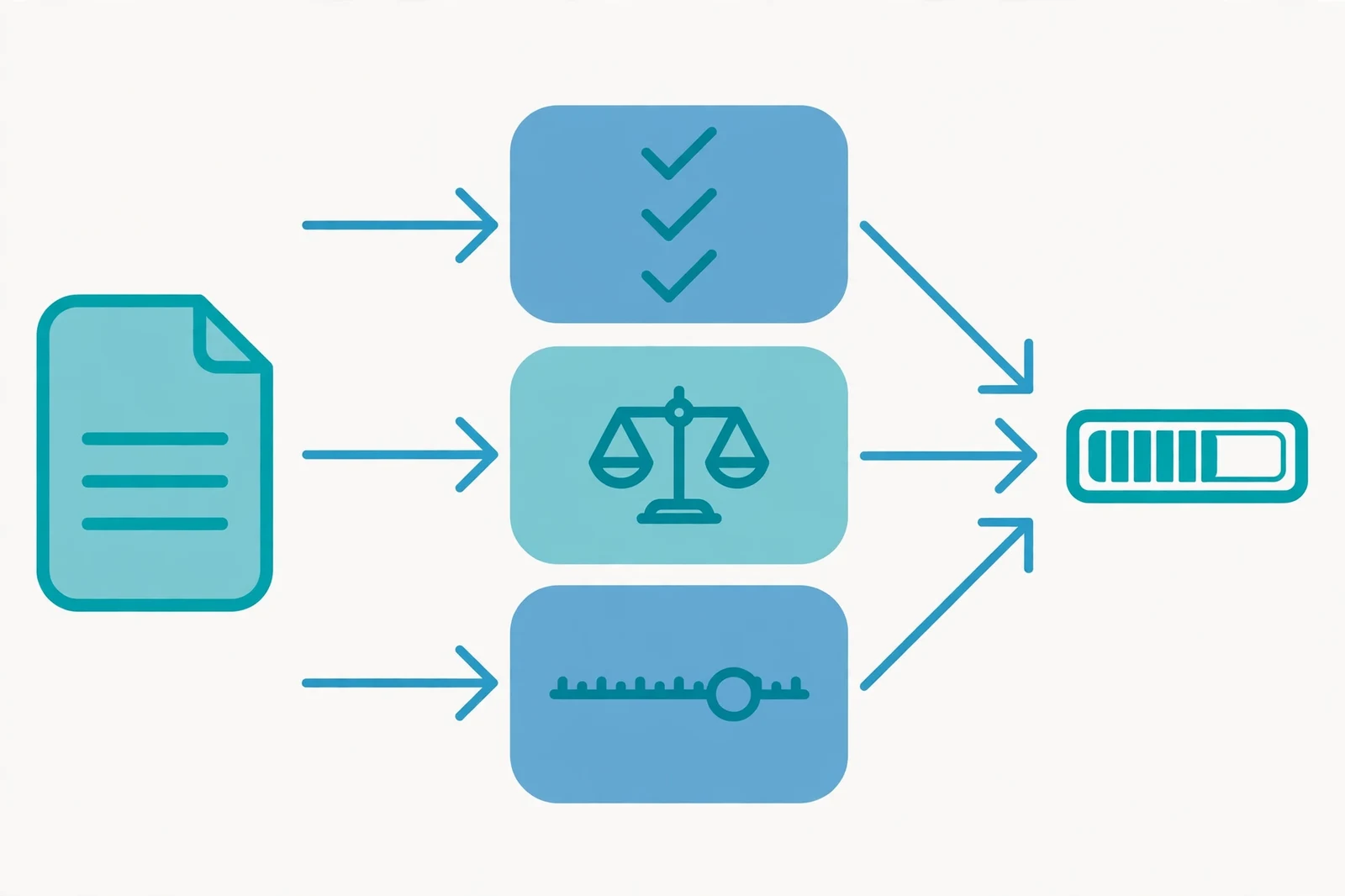
If you read my earlier posts on decision models, you already know the shape of this: instead of a chatbot that writes a paragraph you have to parse, a decision model takes your input (a ticket, a form, a photo) plus questions you define, and returns probabilities over the answers you supplied. The questions come in three types:
- Choice — pick one: "Which team owns this ticket: billing, security, or support?"
- Boolean — yes or no as a probability: "Is this email a phishing attempt?"
- Score — rate it: "How urgent is this request: low or high?"
No generated prose to scrape. Your application reads the numbers and acts automatically on confident calls, or escalates the uncertain ones — using a threshold you set.
What's new: two open models at the top of the leaderboard
mammoth-1 is the 27B model; elephant-1 the 9B one. Base Labs built them by post-training Qwen3.5-27B and Qwen3.5-9B — one epoch over 6.21 million training examples, spread across 72 GB300 GPUs — into decision models. The training adds a squared-error term to the loss and randomly inserts an "I don't know" option into the training data, which is meant to teach the model to flag uncertainty instead of forcing an answer.
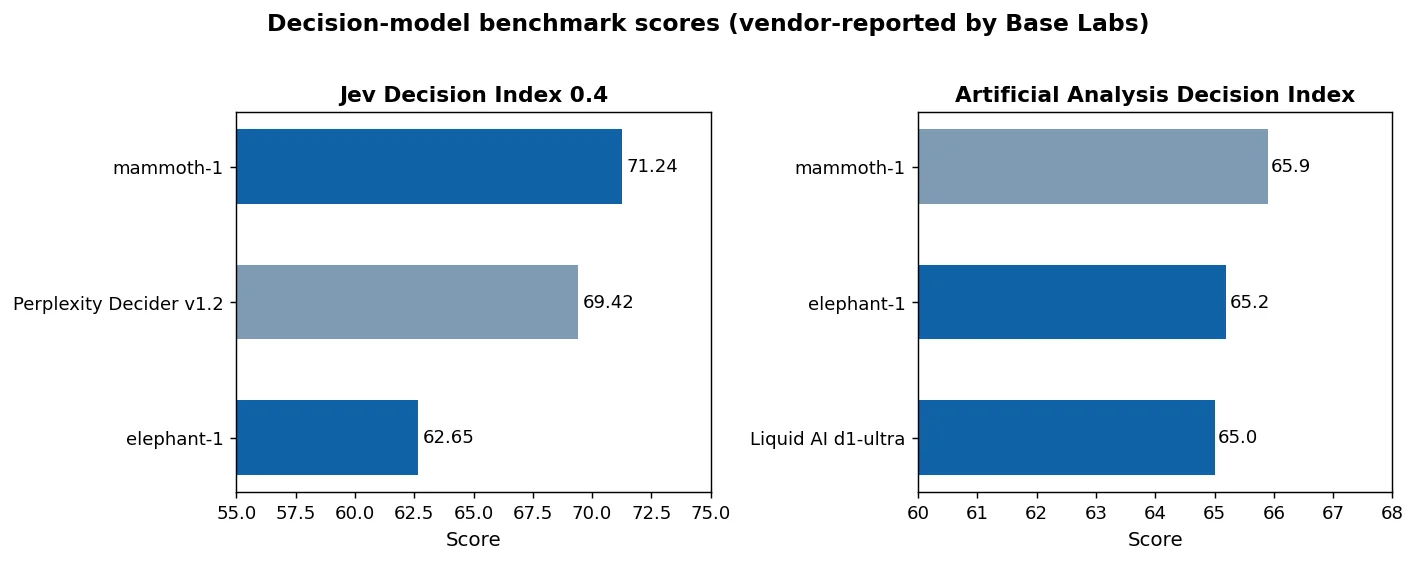
The reported scores, from the two benchmarks Base Labs cites:
- Jev Decision Index 0.4: mammoth-1 scored 71.24 — first of 208 models, 1.8 points ahead of Perplexity Decider v1.2 at 69.42. elephant-1 scored 62.65, tied for 7th overall and the best decision model under 15 billion parameters.
- Artificial Analysis Decision Index: mammoth-1 at 65.9, elephant-1 at 65.2 — level with Liquid AI's d1-ultra, the previous best.
Both models are genuinely open: the weights are on Hugging Face under the MIT license, so you can host them anywhere. Baseten's hosted API runs them with zero data retention by default.
Free this week: how to try them before October 27
Vercel put both models on its AI Gateway free through October 27 — use baseten/mammoth-1 or baseten/elephant-1 as the model name. Both support a 16k-token context window, and you can ask several questions about the same input in one request: pick the support team (Choice), check for a refund request (Boolean), rate urgency (Score). Your application sets the probability threshold for acting automatically versus sending a result for review.
The local angle: elephant-1 can live on your machine
The 9B model is the interesting one for local AI. MIT-licensed weights at 9B parameters put elephant-1 squarely in consumer territory — the same size bracket as chat models that run comfortably on a 16 GB machine. And the typed System One API it uses is the same interface llama.cpp already serves at /v1/systemone, so code written against local decision models ports over.
One honest limitation: Base Labs trained these on text only, leaving Qwen3.5's vision encoder frozen, so multimodal decisions (documents plus images) are listed as future work. If your workload is text plus images, Cloudflare's multimodal Clef is still the better local fit today.
Honest caveats before you wire approvals to it
- These are vendor-reported numbers; the full Jev scores are computed by the index maintainers on private tests.
- The technical report has its own small inconsistencies — elephant-1's Artificial Analysis score is reported as both 65 and 65.2 across Base Labs' own materials, and the public Jev score as 72.2 versus 74.0 in a table — as StartupFortune's review flags. Worth a raised eyebrow, not a disqualification.
- No latency or throughput numbers were published, and regular API pricing isn't public — so the real cost after October 27 is unknown.
- The headline claim — "knows when it should not make a decision" — has no standard calibration metric, so it isn't independently measurable yet.
Treat this week as a calibration week: run your own messy tickets through it, check whether high probabilities line up with correct answers, and set your threshold from data, not vibes.
The bottom line
Decision models are maturing fast — Clef landed on Ollama on October 19, and now mammoth-1 and elephant-1 take the top open scores with MIT weights. The practical move today: try them free before October 27, measure on your own data, and if you want a decision model that never phones home, elephant-1's weights are waiting on Hugging Face.
Sources
- Vercel changelog: Baseten's Mammoth-1 and Elephant-1 now available on AI Gateway for free (published 2026-10-21)
- Baseten blog: The top ranked decision models in the world: mammoth-1 and elephant-1
- Base Labs technical report: Mammoth-1 and Elephant-1: frontier decision models
- Baseten model library: mammoth-1
- StartupFortune: Mammoth-1 and Elephant-1 Decision Models Review as Base Labs Claims the Top Spot
- Superpower Daily: Baseten releases AI models that score decisions instead of writing answers